
Quick Summary
- Security testing is now standard practice, but its performance impact is still the most commonly overlooked part of DevSecOps.
- 36% of organisations now develop software using a DevSecOps approach, up from just 27% in 2020, but adoption of the practice doesn’t automatically mean performance is validated alongside it.
- Every security control an application gains, encryption, authentication, rate limiting, logging, WAF inspection, also consumes CPU, memory, or request-processing time, and that cost is rarely measured until customers feel it.
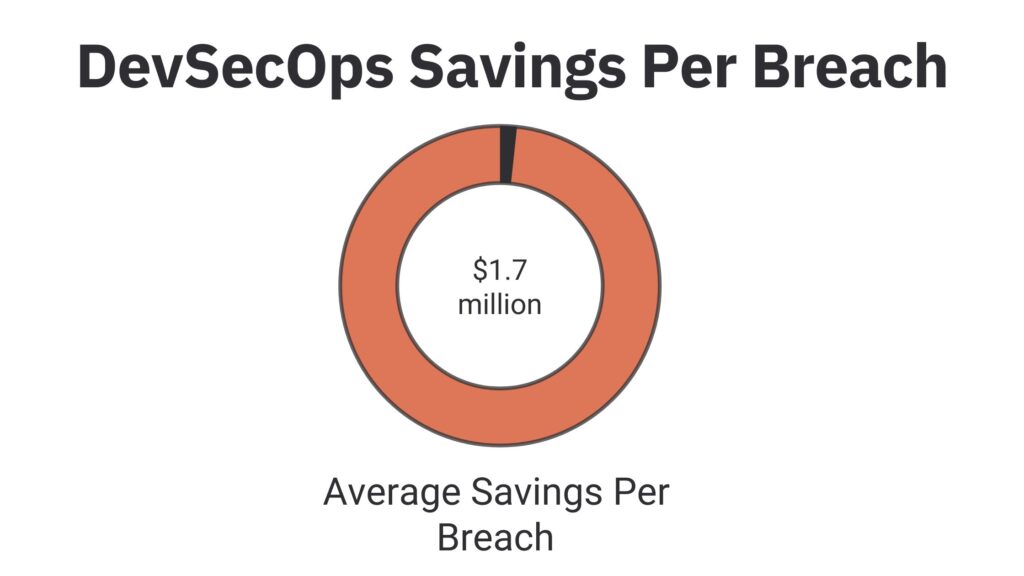
- Organisations with mature DevSecOps and automated security practices save an average of $1.7 million per breach compared to those without, according to IBM’s Cost of a Data Breach research.
- For BFSI and other high-transaction industries, security and performance can’t be sequential checkpoints; they need to be validated together, in the same pipeline, on every release.
Modern software teams are under constant pressure to release applications faster without compromising security or user experience. Most organisations have already integrated security testing into their development process, but one important area is still often overlooked: every security control introduced into an application can also affect its performance.
This is why DevSecOps performance testing CI/CD pipeline integration is becoming an essential part of modern software delivery. DevSecOps is the practice of making security a continuous part of software development instead of treating it as the final step before release. When performance engineering is added to the same process, teams can identify both security and performance issues much earlier. This helps deliver applications that are secure, reliable, and responsive.
For industries such as banking, telecommunications, and retail, where every second matters, security testing and performance engineering should work together from the beginning of the development lifecycle.
Why DevSecOps Is More Than Just Security
Many people think DevSecOps is simply about adding security scans to the CI/CD pipeline. While security is a major part of DevSecOps, the overall goal is much broader.
DevSecOps encourages development, operations, security, and quality teams to work together throughout the software lifecycle. Instead of discovering problems just before deployment, teams continuously validate code, infrastructure, security, and application behaviour.
This is where performance engineering becomes equally important.
A new security feature may successfully block threats, but if it also slows application response times or creates bottlenecks, it can negatively affect customers and business operations.
The strongest DevSecOps strategy protects both security and application performance.
Traditional Development vs DevSecOps
| Traditional Development | Modern DevSecOps |
| Security testing happens near release. | Security testing happens throughout development. |
| Performance testing is often delayed. | Performance validation is continuous. |
| Teams work independently. | Development, security, operations, and quality teams collaborate. |
| Issues are found late. | Issues are detected much earlier. |
| Releases involve more manual effort. | Automation supports faster and more reliable releases. |
By following security testing CI/CD pipeline practices, organisations can improve software quality while reducing production risks.
Where the industry actually stands in 2026
| Metric | Figure | Why it matters |
| Organisations practising DevSecOps | 36%, up from 27% in 2020 | Adoption is growing fast, but more than half of teams still don’t treat security and delivery as one continuous process |
| Teams that would benefit from automating security/compliance | 96% of respondents agree | The gap between “should automate” and “does automate” is where performance regressions hide |
| Cloud-native share of DevSecOps spend | 48% of the market | Containerised, microservices-based applications multiply the number of API endpoints and security checkpoints that need performance validation |
| Savings from mature DevSecOps adoption | ~$1.7M less per breach (IBM, 2024) vs. low-maturity organisations | Strong security and performance practices reduce both breach frequency and breach cost |
| AWS organisations still deploying manually | 38% | Manual deployment steps are exactly where performance testing gets skipped under release pressure |
Figures compiled from GitLab, Checkmarx, IBM Cost of a Data Breach, and StrongDM/Practical DevSecOps industry research (2024–2026). Methodologies vary by survey population, treat these as directional benchmarks.
The Hidden Link Between Security Testing and Application Performance
Security and performance are often treated as two separate engineering activities. In reality, they are closely connected.
Every security control added to an application consumes resources, processes additional requests, or introduces extra validation steps. These changes improve protection but can also influence application performance if they are not carefully measured.
For example, enabling stronger encryption improves data security. However, encryption also requires additional processing power. Similarly, adding authentication checks or API gateways improves access control but may increase response times. Without performance validation, these changes may not become visible until customers begin experiencing slower applications, the kind of degradation that application performance monitoring is designed to catch before it reaches that point.
| Security Control | Possible Performance Impact |
| TLS encryption | Increased CPU usage during data processing |
| Authentication services | Higher login response times |
| API gateway validation | Additional request processing |
| Rate limiting | Reduced throughput during peak traffic |
| Security logging | Increased storage and processing overhead |
| Web application firewall | Extra request inspection before processing |
The goal is not to reduce security. The goal is to ensure that security improvements do not create unnecessary performance issues. This is why DevSecOps BFSI teams increasingly validate both security and performance together during every release.
Where Security Testing Fits Into a Modern CI/CD Pipeline
Modern CI/CD pipelines include much more than automated builds and deployments. They also provide opportunities to validate security and application performance at every stage.
Instead of waiting until the application is complete, engineering teams continuously test code quality, dependencies, APIs, infrastructure, and application behaviour throughout development. The earlier issues are detected, the easier and less expensive they are to fix.
| CI/CD Stage | Security Activity | Performance Validation |
| Code | Static application security testing | Code quality review |
| Build | Dependency scanning | Build performance monitoring |
| Test | Dynamic application security testing | Functional performance validation |
| Integration | API security testing | API response time validation |
| Pre-Production | Penetration testing | Load and scalability testing |
| Release | Runtime monitoring | Continuous application performance monitoring |
Following this structured approach helps organisations build secure applications without sacrificing speed, scalability, or customer experience. Teams whose architecture is built on microservices will find that this integration and pre-production layer is exactly where most performance regressions actually originate, see our companion guide on API performance testing for microservices architectures for more on why contract-level, API-first testing matters here specifically.
Five Security Testing Mistakes That Can Create Performance Problems
Security testing is essential, but it should always be supported by performance engineering. Without both disciplines working together, small configuration changes can create unexpected problems in production. Here are five common situations where security improvements can unintentionally affect application performance.
1. Authentication Creates a Performance Bottleneck
Modern authentication methods strengthen application security by validating every user request. However, if authentication services are not properly optimised, login requests may take longer than expected. During busy periods, these delays can quickly affect the overall user experience. Performance testing helps identify authentication bottlenecks before deployment.
2. Encryption Adds Processing Overhead
Encryption protects sensitive customer information and is an essential part of secure application development. At the same time, encryption requires additional processing resources. If organisations do not measure this impact, applications may become slower as workloads increase. Regular shift-left security testing combined with performance validation helps teams identify these issues early instead of discovering them in production.
3. API Rate Limiting Blocks Genuine Users
Rate limiting is an effective security control that helps protect applications from abuse and malicious traffic. It limits the number of requests that a user or system can make within a specific period. However, if rate limits are configured too aggressively, they may also block genuine customers during periods of high demand.
Imagine a banking application during salary day or a major shopping event. Customer traffic naturally increases. If rate limiting is not tested under realistic workloads, legitimate users may receive errors even though the application itself is healthy. Performance engineering helps organisations find the right balance between protecting applications and maintaining a smooth customer experience.
4. Security Logging Slows Critical Transactions
Detailed logging plays an important role in security monitoring, auditing, and incident investigations. It allows organisations to understand what happened if an issue occurs. The challenge is that excessive logging can also affect application performance.
Writing large volumes of logs for every transaction increases storage activity and processing time. This may seem insignificant during testing but can become noticeable when thousands of users access the application simultaneously. Performance testing helps teams measure the impact of logging before applications reach production.
5. Performance Testing Happens Too Late
Many organisations complete security testing successfully but perform performance testing only near the end of the release cycle. This creates a difficult situation. If performance issues appear after security controls have already been implemented, engineering teams must spend additional time identifying which change caused the slowdown.
Running performance-security trade-off analysis throughout development allows teams to detect issues much earlier. Instead of troubleshooting production problems, they can optimise security and performance together before deployment.
DevSecOps for BFSI: Compliance and Performance Must Work Together
For organisations in banking, financial services, and insurance, security is not the only priority. Applications must also remain reliable, responsive, and available during everyday operations and periods of peak demand.
Customers expect digital banking services to work smoothly whether they are checking account balances, transferring funds, or making online payments. At the same time, organisations must maintain strong security practices and support their internal governance and compliance requirements. A successful BFSI DevSecOps compliance strategy considers both security and performance from the beginning of the development lifecycle.
| Priority | Business Benefit |
| Secure customer information | Builds customer confidence and trust |
| Reliable application performance | Improves user experience |
| Continuous security validation | Reduces production risks |
| Performance monitoring | Detects issues before customers notice them |
| Consistent releases | Supports business continuity |
| Better engineering collaboration | Faster and more reliable software delivery |
Security and performance should never compete with each other. Instead, they should work together to support reliable digital services, the same principle that shapes how insurance and retail and e-commerce organisations need to approach peak-load periods without compromising on data protection.
Building a DevSecOps Pipeline That Supports Performance
A modern DevSecOps pipeline should validate security and performance at every important stage of software delivery. This reduces production surprises and gives engineering teams greater confidence before every release. Here is a simple roadmap that organisations can follow.
| Step | Action | Outcome |
| 1 | Define security and performance goals together | Teams work towards common objectives |
| 2 | Automate security testing throughout development | Vulnerabilities are identified earlier |
| 3 | Validate application performance after every major security change | Performance regressions are detected quickly |
| 4 | Monitor production continuously | Teams gain visibility into real user experience |
| 5 | Review performance budgets before every release | Applications remain responsive as new features are added |
| 6 | Continuously improve using production insights | Both security and performance become stronger over time |
Following this structured approach allows organisations to build applications that remain secure without sacrificing scalability or customer experience. Steps 4 and 6 in particular depend on continuous observability and site reliability engineering practices, so that production insight actually feeds back into the next release rather than sitting in a dashboard no one reviews.
How Avekshaa Helps Organisations Integrate Security and Performance Testing
Successful DevSecOps is not only about adding more security checks to the CI/CD pipeline. It is about understanding how every security decision affects application performance and business outcomes.
Avekshaa Technologies helps enterprises integrate security testing with performance engineering so that both disciplines work together throughout the software lifecycle, using the same proprietary P-A-S-S framework (Performance, Availability, Scalability, Security) that anchors our wider independent testing and quality assurance practice. This includes helping organisations:
- Build integrated testing strategies for modern CI/CD pipelines
- Identify performance risks introduced by new security controls, using the same performance testing and engineering methodology that delivered a 200% throughput improvement for a bank’s SMS gateway without any hardware augmentation, see the full case study
- Validate application behaviour before production deployment, including cloud engineering checks that confirm auto-scaling and security controls behave correctly together under real load
- Improve collaboration between development, security, and performance teams through unified application performance monitoring and Datadog-powered observability
- Strengthen application reliability for business-critical systems, drawing on delivery experience that includes a same-day migration of 461 bank branches and 851 ATMs with zero service disruption
Rather than treating security and performance as separate activities, Avekshaa helps organisations create engineering practices that support both. For regulated industries, that also means independent, auditable evidence aligned to frameworks like PCI-DSS and ISO 27001:2022, the kind of evidence banks, NBFCs, and insurers need to show alongside a passing security scan.
Key Takeaways
- DevSecOps performance testing CI/CD pipeline integration helps organisations deliver applications that are secure, reliable, and responsive
- Security controls should always be evaluated for their impact on application performance
- Continuous testing throughout the CI/CD pipeline reduces production risks and improves software quality
- Security and performance engineering are complementary practices that work best when implemented together
- Engineering teams should validate both protection and performance before every production release
Conclusion
Modern applications need more than strong security. They also need consistent performance that keeps pace with customer expectations and business growth. By bringing security testing and performance engineering together throughout the CI/CD pipeline, organisations can identify issues earlier, improve release quality, and deliver reliable digital experiences.
If your organisation is looking to strengthen its DevSecOps performance testing CI/CD pipeline integration strategy, Avekshaa Technologies can help. With deep expertise in performance engineering and enterprise application reliability, Avekshaa helps organisations build secure, scalable, and high-performing software that is ready for today’s demanding digital environments. Book a meeting to discuss your CI/CD pipeline.
Frequently Asked Questions
- What is DevSecOps and how is it different from DevOps?
DevSecOps is an approach that integrates security into every stage of the software development lifecycle instead of treating it as a final step before deployment. Unlike traditional DevOps, DevSecOps encourages development, operations, and security teams to work together throughout the CI/CD pipeline. This makes DevSecOps performance testing CI/CD pipeline integration an important part of delivering secure and reliable applications. - Why should performance testing be included in a DevSecOps pipeline?
Security controls such as authentication, encryption, and API validation can affect application performance. Including performance testing alongside security testing helps teams identify bottlenecks early and ensures applications remain fast, stable, and secure before release. - Can security testing reduce application performance?
Yes, it can if the impact is not measured properly. Features like encryption, security logging, and rate limiting consume system resources and may increase response times. This is why security testing CI/CD pipeline practices should always include performance validation to balance protection with application efficiency. - At what stage should security testing begin in the CI/CD pipeline?
Security testing should begin as early as possible during development. Static code analysis, dependency scanning, API testing, and performance validation should all be integrated throughout the CI/CD pipeline rather than being performed only before production. - What is the difference between SAST and DAST?
Static Application Security Testing, or SAST, analyses application source code without running the application. Dynamic Application Security Testing, or DAST, evaluates the application’s behaviour while it is running. Both methods support shift-left security testing by identifying security issues earlier in the software development lifecycle. - Can performance testing and security testing run together?
Yes. Modern CI/CD pipelines are designed to automate multiple validation activities at the same time. Running security and performance tests together allows engineering teams to identify vulnerabilities and performance issues before applications reach production. - Why is DevSecOps important for BFSI organisations?
Banks and financial institutions manage sensitive customer data and business-critical applications. Integrating security and performance testing helps improve application reliability, reduce operational risks, and support a stronger BFSI DevSecOps compliance strategy while delivering a better customer experience. - How often should performance testing be performed in a DevSecOps environment?
Performance testing should be performed continuously throughout development. It is recommended after significant code changes, infrastructure updates, or new security implementations to ensure applications continue meeting performance expectations. - What are the biggest challenges when combining security and performance testing?
Some common challenges include balancing strong security with application speed, identifying performance bottlenecks caused by security controls, reducing false positives, and maintaining efficient automated testing. Understanding these performance-security trade-offs helps engineering teams make informed decisions during development. - How can organisations build an effective DevSecOps strategy?
Start by integrating security and performance testing into every stage of the CI/CD pipeline. Automate testing wherever possible, monitor applications continuously, and encourage collaboration between development, security, operations, and performance engineering teams. This approach helps organisations release secure, scalable, and high-performing applications with greater confidence. - What does mature DevSecOps actually save an organisation?
Beyond faster releases, organisations with high DevSecOps maturity save an average of $1.7 million per data breach compared to organisations with low or no DevSecOps adoption, according to IBM’s Cost of a Data Breach research. Combined with the reduced cost of catching performance regressions before release rather than in production, this is the core business case for treating security and performance as one continuous validation process rather than two separate gates.