
Quick Summary
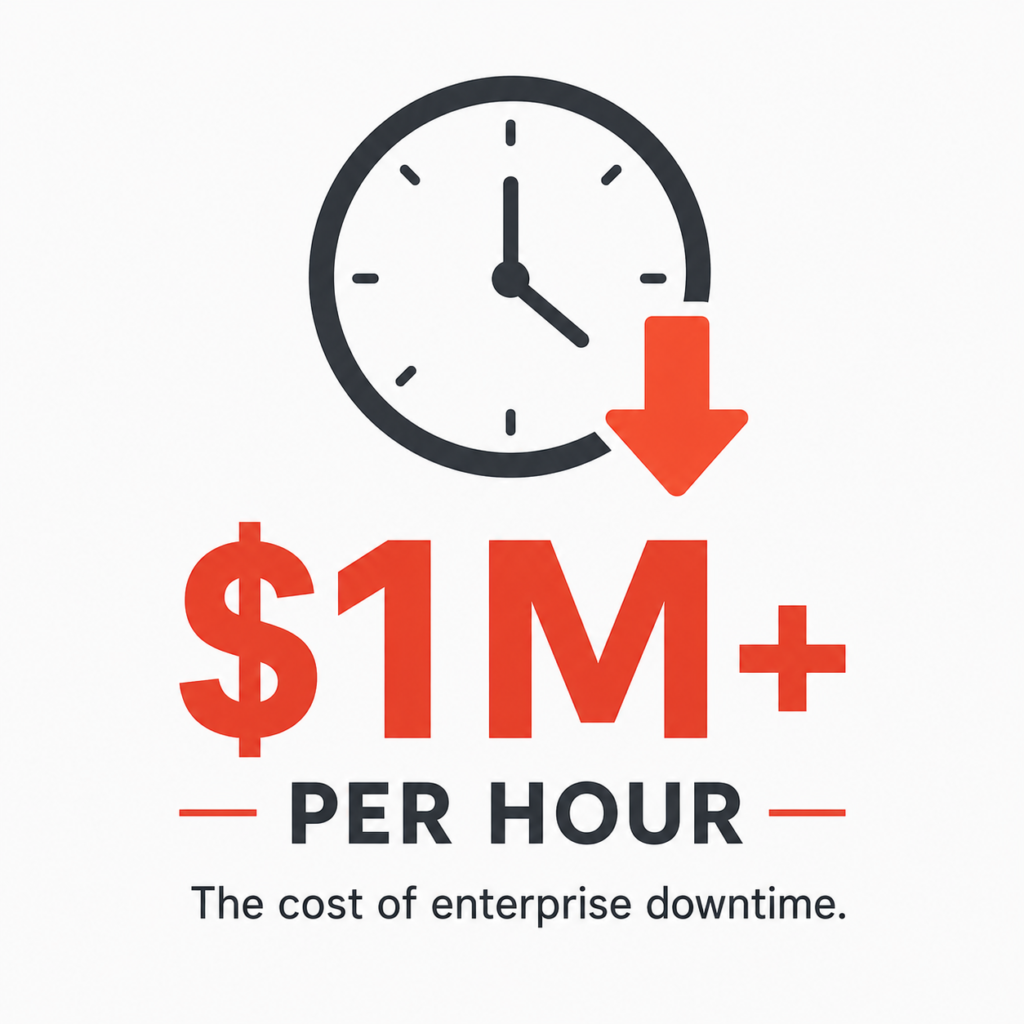
- A single hour of downtime can cost a large enterprise millions in lost revenue, support overload, and reputational damage, which is why chaos engineering has moved from a Netflix era experiment to a board level priority by 2026.
- This guide covers the top 10 chaos engineering service providers in 2026, evaluated on depth of expertise, CI/CD and SRE integration, regulated industry experience, and proven MTTR improvement.
- Avekshaa Technologies stands out for pairing chaos engineering with two decades of application performance engineering and site reliability engineering expertise, particularly for banks, NBFCs, and insurers.
- According to Gartner Peer Community research, 59 percent of surveyed organizations say they are currently deploying chaos engineering, and improving mean time to recovery (MTTR) is one of the most cited benefits.
- Choosing the right partner means looking past tool features. Compliance alignment, observability maturity, and the ability to operationalize findings into real fixes matter just as much as the failure injection library.
- Enterprises still running outdated incident response playbooks can estimate their exposure using a free IT downtime calculator before choosing a chaos engineering partner.
A single hour of downtime can cost a large enterprise millions in lost revenue, support overload, and reputational damage. Yet most organisations only discover their systems are fragile after something breaks in production. Chaos engineering flips that script. It deliberately injects failure into systems, in a controlled way, so teams can find weaknesses before customers do.
By 2026, chaos engineering has moved from a Netflix era experiment to a standard practice inside banks, telecom operators, airlines, and SaaS platforms. Choosing the right service provider instead of just a tool has become the difference between resilience theatre and real operational confidence. This guide breaks down the top 10 chaos engineering service providers shaping enterprise resilience in 2026, what makes each one different, and how to pick the right fit for your environment.
Quick Comparison of All Top 10 Providers
| S. No. | Provider | Core Focus | Best Fit For | Standout Strength |
|---|---|---|---|---|
| 1 | Avekshaa Technologies | Chaos engineering embedded in performance engineering and SRE | Banks, NBFCs, insurers needing regulated, outcome-driven resilience | Findings tied to real production telemetry and remediation, not just reports |
| 2 | Gremlin | Self-serve failure-as-a-service platform | Enterprises wanting a mature, pre-built scenario library | Large catalogue of failure scenarios, strong Kubernetes support |
| 3 | AWS Fault Injection Simulator | Native AWS fault injection | AWS-heavy environments | Tight integration with EC2, ECS, EKS, RDS, IAM, and monitoring |
| 4 | Azure Chaos Studio | Native Azure fault injection | Microsoft cloud and compliance-heavy organisations | Deep ties to Azure Monitor and Application Insights with audit trails |
| 5 | Steadybit | Cloud-native reliability engineering | Platform engineering teams running continuous experiments | Kubernetes-native experiment editor built for everyday pipelines |
| 6 | Harness Chaos Engineering | Chaos testing inside a CI/CD platform | DevOps-mature organisations | Automatic resilience tests triggered on every deployment |
| 7 | NetHavoc | Network-level failure simulation | Telecom and network-heavy infrastructure | Specialised latency, packet loss, and outage simulation |
| 8 | ChaosNative (Litmus) | Enterprise layer on open-source LitmusChaos | Organisations with strong open-source engineering culture | Kubernetes-native framework with added governance and reporting |
| 9 | IBM Resilience and Automation | Disaster recovery validation with chaos principles | Existing IBM infrastructure customers | Chaos testing folded into broader automation and DR programs |
| 10 | Reliably | Reliability-as-code | Teams early in SRE maturity | Experiments tied directly to defined SLOs |
Did You Know?
More than half of surveyed organisations, 59 percent, say they are currently deploying chaos engineering, and improving mean time to recovery (MTTR) is one of the most commonly cited benefits, according to Gartner Peer Community research on chaos engineering adoption.
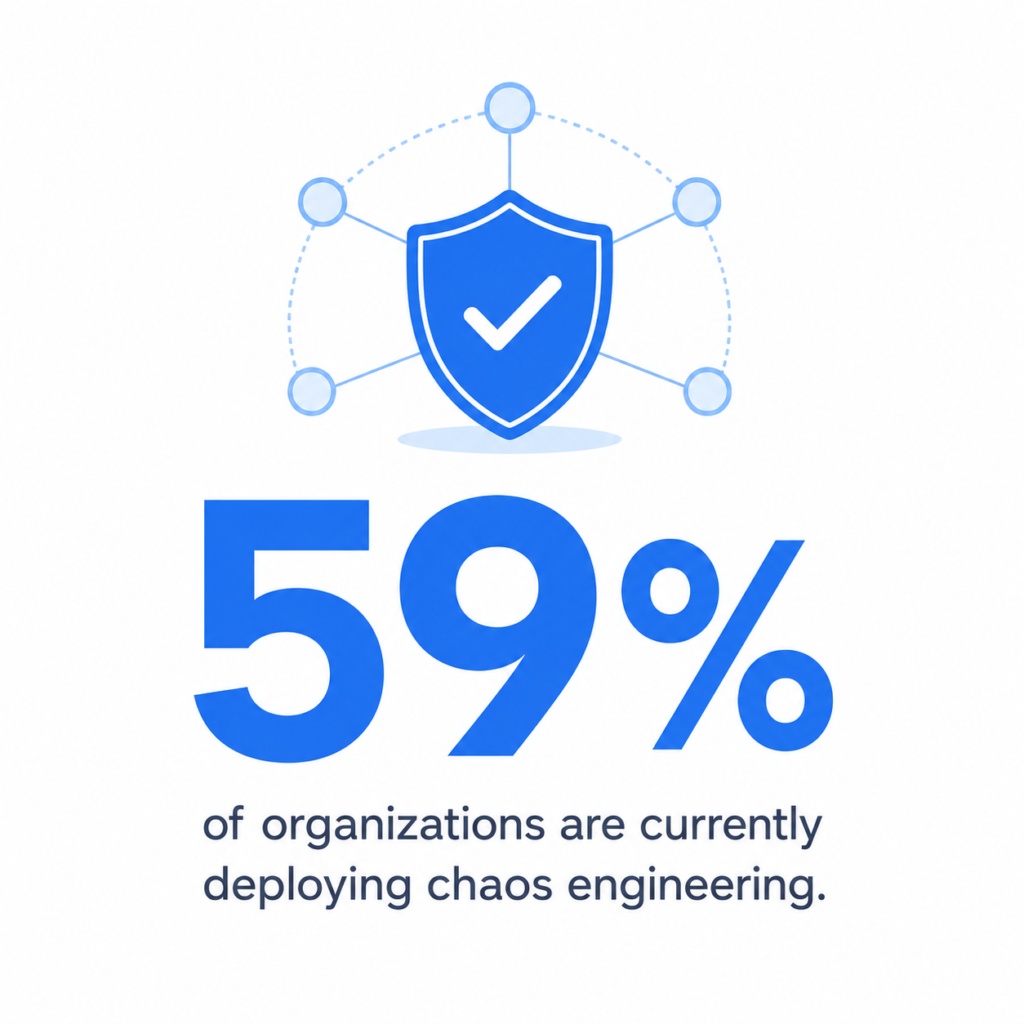
This shift from theory to practice shows chaos engineering has crossed from early adopter territory into mainstream enterprise IT strategy.
What Is Chaos Engineering and Why It Matters in 2026
Chaos engineering is the discipline of running controlled experiments on a system, in production or production like environments, to reveal hidden weaknesses before they cause real outages. According to the community established Principles of Chaos Engineering, the practice involves defining a measurable steady state, hypothesising that it will hold under stress, then deliberately introducing real world failure conditions to try to disprove that hypothesis. Instead of waiting for a server crash, a network partition, or a sudden traffic spike to expose a flaw, engineering teams trigger these conditions on purpose, observe how the system responds, and fix what breaks.
In 2026, three forces are pushing chaos engineering from a nice to have into a board level priority for IT leaders.
- Distributed systems have multiplied failure points. Microservices, containers, and multi cloud deployments mean a single transaction can touch dozens of services. Each dependency is a potential point of failure that traditional testing rarely catches.
- Customers have zero tolerance for downtime. Whether it is a UPI payment, an insurance claim, or a flight booking, users expect digital services to work instantly, every time. A few minutes of disruption now travels across social media within minutes.
- Regulators are paying closer attention. Financial services and critical infrastructure providers are increasingly expected to demonstrate operational resilience, not just describe it in a policy document.
Service providers in this space combine fault injection tooling, observability, and engineering expertise to help enterprises run these experiments safely and translate the findings into measurable reliability improvements.
How We Evaluated These Providers
This list weighs four factors that matter most to enterprise buyers: depth of chaos engineering expertise rather than just tooling resale, ability to integrate experiments into CI/CD and SRE workflows, experience across regulated industries such as banking and insurance, and proven outcomes in reducing downtime or improving mean time to recovery (MTTR).
Top 10 Chaos Engineering Service Providers in 2026 : In Detail
1. Avekshaa Technologies
Headquarters: Bengaluru, India, with operations in Sydney, Australia and a growing presence in the UK
Founded: 2011, by veterans of the performance engineering industry with a combined background at Infosys, including the team that built Infosys’s Finacle performance engineering practice
Scale: Roughly 150 to 160 employees globally, serving banking, NBFC, insurance, telecom, retail, and healthcare clients
Avekshaa Technologies brings over two decades of combined performance engineering expertise from its founding team to chaos engineering, making it a strong fit for banks, NBFCs, and insurance companies that cannot afford guesswork around production stability. Rather than treating chaos testing as a standalone tool deployment, the team embeds fault injection into the broader application performance engineering lifecycle, correlating failure experiments with real production telemetry through its proprietary P-A-S-S Assurance platform.
This approach has helped clients resolve widespread outages affecting tens of thousands of users by identifying the exact failure points before they recurred. Avekshaa’s strength lies in pairing chaos experiments with deep site reliability engineering practices, so findings translate directly into remediation rather than just a report of what broke. The company has also expanded into the UK, opening operations in Sheffield and London to serve European enterprise clients closer to home.
2. Gremlin
Headquarters: San Francisco Bay Area, California, United States
Founded: 2016, by Kolton Andrus and Matthew Fornaciari, who previously led resilience engineering at Netflix and Amazon
Scale: A venture backed company that has raised roughly 27 million dollars in funding, used by more than 100 of the Fortune 2000, including several of the largest US banks
Gremlin is one of the original failure as a service platforms and remains a default choice for enterprises wanting a mature, self serve chaos engineering platform. It offers a large library of pre built failure scenarios across infrastructure, application, and network layers, with strong support for Kubernetes, Linux, and Windows environments. Gremlin has since broadened beyond pure fault injection into a wider reliability management platform that adds risk scoring and disaster recovery testing, but chaos experiments remain at the core of its offering.
3. AWS Fault Injection Simulator
Headquarters: Operated by Amazon Web Services, headquartered in Seattle, Washington, United States
Founded: AWS itself launched in 2006; Fault Injection Simulator (renamed AWS Fault Injection Service) reached general availability in March 2021
Scale: Backed by Amazon’s global cloud infrastructure footprint across dozens of regions worldwide
For organisations heavily invested in AWS, Fault Injection Simulator (FIS) offers native integration with EC2, ECS, EKS, RDS, and Lambda. It is particularly useful for teams that want chaos experiments tied closely to existing AWS monitoring and IAM controls, reducing the overhead of managing a separate third party tool. Because it is billed per action minute rather than as a separate license, it tends to suit teams that already standardise on AWS native tooling for cost and governance reasons.
4. Azure Chaos Studio
Headquarters: Operated by Microsoft, headquartered in Redmond, Washington, United States
Founded: Microsoft was founded in 1975; Azure Chaos Studio entered public preview in late 2021 and reached general availability on November 1, 2023
Scale: Available across 17 or more production Azure regions at general availability, backed by Microsoft’s enterprise compliance and security stack
Microsoft’s Azure Chaos Studio ties fault injection directly into Azure Monitor and Application Insights, giving enterprises in regulated industries fine grained control and audit trails. It is a natural fit for organisations standardising on Microsoft’s cloud and compliance stack, particularly those that need to demonstrate resilience evidence as part of existing Azure governance and security review processes.
5. Steadybit
Headquarters: Solingen, Germany, with a remote first global team
Founded: 2019, by Benjamin Wilms and Johannes Edmeier, with Wilms bringing over 20 years of experience in chaos engineering consulting before founding the company
Scale: A venture backed company that has raised close to 14 million dollars across pre seed, seed, and Series A rounds, serving customers from startups to Fortune 500 enterprises
Steadybit focuses on reliability engineering for distributed, cloud native architectures. Its experiment editor and Kubernetes native design make it popular with platform engineering teams that want to run chaos experiments as part of everyday deployment pipelines rather than as periodic events. Steadybit also supports full on premises and air gapped deployment, which has made it a common choice among banks and insurers with strict data residency requirements.
6. Harness Chaos Engineering
Headquarters: San Francisco, California, United States
Founded: 2017, by Jyoti Bansal, founder of AppDynamics, and Rishi Singh; the dedicated Chaos Engineering module launched after Harness acquired ChaosNative in March 2022
Scale: A unicorn valued at roughly 5.5 billion dollars as of its December 2025 funding round, serving more than 1,000 enterprise customers including several large global banks and airlines
Harness brings chaos engineering into its broader CI/CD platform, allowing teams to trigger resilience tests automatically as part of the deployment pipeline. This is valuable for DevOps mature organisations that want chaos testing to be continuous rather than a quarterly exercise. Worth noting for due diligence: Harness Chaos Engineering is now built on the same LitmusChaos foundation as ChaosNative below, since Harness acquired that company and continues to sponsor the open source project.
7. NetHavoc
Headquarters: Santa Clara, California, United States, with a major engineering centre in Noida, India
Founded: Parent company Cavisson Systems was founded in 2011; NetHavoc launched later as Cavisson’s dedicated chaos engineering product
Scale: Cavisson Systems employs several hundred people globally and serves enterprise performance testing and observability customers across banking, telecom, and retail
NetHavoc, built by Cavisson Systems, specialises in simulating network level failures such as latency, packet loss, and service outages across containers and microservices. It is a good fit for telecom and infrastructure heavy enterprises where network resilience is the primary risk, particularly because it ships from the same vendor as Cavisson’s performance testing and observability products, making it easier to correlate chaos experiments with load test results.
8. ChaosNative (Litmus)
Headquarters: Originally based in Bengaluru, India; now operates as part of Harness, headquartered in San Francisco, California
Founded: ChaosNative was founded by the creators of the open source LitmusChaos project, which later joined the Cloud Native Computing Foundation; the company was acquired by Harness in March 2022
Scale: LitmusChaos is used by major organisations including Intuit, VMware, Red Hat, and Mercedes Benz, and remains one of the largest open source communities in the chaos engineering space
Built on the open source LitmusChaos project, ChaosNative offers an enterprise layer of governance, reporting, and managed services on top of a Kubernetes native chaos engineering framework. It appeals to organisations with strong open source engineering cultures. Buyers should note that ChaosNative’s commercial roadmap is now set by Harness, so evaluating it effectively means evaluating Harness’s broader Chaos Engineering module.
9. IBM Resilience and Automation Capabilities
Headquarters: Armonk, New York, United States
Founded: IBM was founded in 1911, making it by far the most established organisation on this list, though its chaos and resilience capabilities are a more recent extension of its automation and disaster recovery portfolio
Scale: A global technology and consulting company with operations in more than 170 countries
Enterprises with existing IBM infrastructure often extend their incident response and resilience programs with IBM’s broader reliability and automation capabilities, which increasingly incorporate chaos testing principles into disaster recovery validation. This option suits organisations that already run IBM Z, IBM Cloud, or IBM consulting engagements and prefer a single vendor relationship over adding a specialist chaos engineering tool.
10. Reliably
Headquarters: London, United Kingdom
Founded: 2017, originally as ChaosIQ, by Russ Miles and Sylvain Hellegouarch, the latter of whom continues to lead the company as CEO
Scale: A small, focused team of fewer than 10 people, built on the open source Chaos Toolkit project with over 300 pre built experiment actions
Reliably positions itself around reliability as code, helping teams define service level objectives (SLOs) and then run chaos experiments specifically designed to validate whether those SLOs hold up under stress. It suits organisations early in their SRE maturity journey, particularly engineering teams that are already comfortable with open source tooling and want a lighter weight, CI/CD native alternative to the larger enterprise platforms on this list.
How to Choose the Right Chaos Engineering Partner
Start by mapping your most business critical transactions, the payment flow, the claims process, the checkout journey, and ask any prospective partner how they would design experiments specifically around those paths. A provider that only demonstrates generic infrastructure failure scenarios is selling a tool, not a resilience strategy.
Next, ask how findings get operationalised. The best partners do not stop at identifying a weakness. They help you fix the underlying architecture, tune your application performance monitoring thresholds, and validate the fix with a repeat experiment.
Finally, weigh industry experience. A provider that has worked through a bank’s RTGS batch processing performance issues or scaled a payment gateway for a five fold transaction surge understands regulatory pressure and peak load behaviour in a way that a generic tooling vendor often does not.
Based on conversations with enterprise reliability teams across banking, insurance, and telecom over the past several years, the pattern is consistent: organisations that succeed with chaos engineering treat it as an extension of performance engineering and SRE, not a separate checkbox exercise. The providers who deliver lasting resilience are the ones who stay involved after the experiment ends, helping translate findings into architecture and process changes. If you want a quick sense of what unplanned downtime could be costing your organisation today, Avekshaa’s IT downtime calculator is a useful starting point before you shortlist a partner.
Frequently Asked Questions
1. What is chaos engineering in simple terms?
Chaos engineering is the practice of deliberately introducing failures, like server crashes or network delays, into a system in a controlled way to see how it responds, so teams can fix weaknesses before they cause real outages.
2. Is chaos engineering only for large enterprises?
No, but the highest value use cases tend to be in organisations running distributed, business critical systems such as banking platforms, e-commerce sites, and telecom infrastructure, where downtime carries a significant cost.
3. How is chaos engineering different from regular load testing?
Load testing checks how a system behaves under expected or peak traffic. Chaos engineering checks how a system behaves when something actually breaks, such as a service going down or a database connection failing, regardless of traffic volume.
4. Is it safe to run chaos engineering experiments in production?
Yes, when done correctly. Experienced providers define a clear blast radius, run experiments during low risk windows initially, and use strong monitoring to halt an experiment immediately if it causes unintended impact.
5. How often should enterprises run chaos engineering experiments?
Most mature organisations run experiments continuously, integrated into CI/CD pipelines, rather than as one off events. Frequency should increase as systems change and new dependencies are introduced.
6. What industries benefit most from chaos engineering?
Banking, financial services, insurance, telecom, and e-commerce see the highest returns because their systems are both highly distributed and extremely sensitive to downtime.
7. How do I measure the ROI of chaos engineering?
Common metrics include reduction in MTTR, fewer production incidents tied to known failure modes, improved uptime percentages, and faster incident resolution due to better documented failure behaviour.
8. Should I choose a chaos engineering tool or a service provider?
Tools are useful if you already have a mature SRE team that can design and interpret experiments. A service provider is the better choice if you need help defining what to test, how to test it safely, and how to act on the results.