Why Smoke Testing Matters More Than Ever
Speed is great, but shipping broken builds is not. Smoke testing provides a quick health check to ensure new builds are stable enough for deeper QA. In 2026, with faster sprints and automated pipelines, smoke testing acts as the first line of defense against wasted cycles and frustrated teams.
This guide covers:
- What smoke testing is and why it matters
- Types of smoke testing
- Key factors to consider when designing smoke test suites
- How to align smoke testing with modern development practices
Smoke Testing in 2026: Everything in a Nutshell
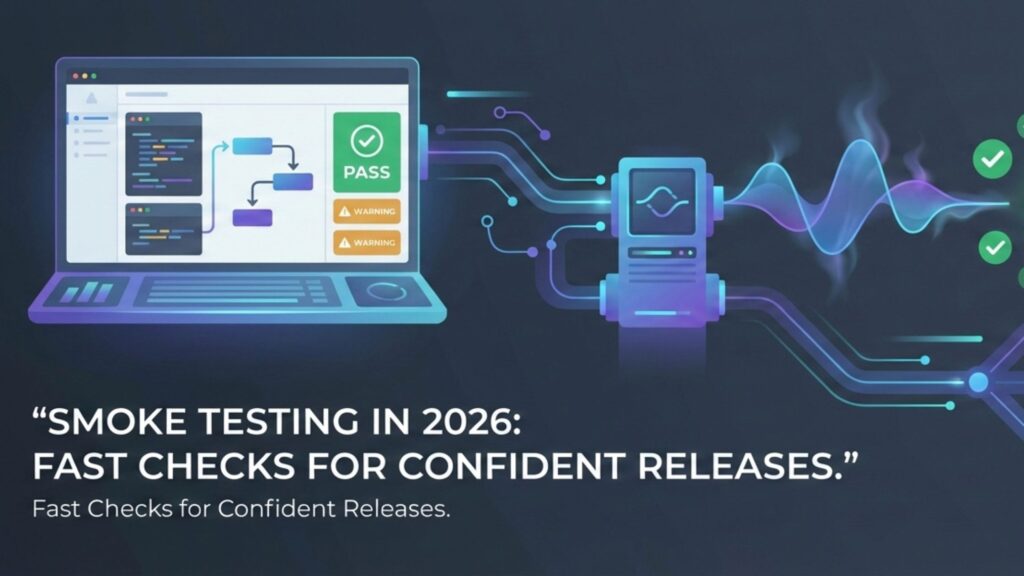
Think of smoke testing as a gatekeeper. If a build passes, it goes forward to detailed QA; if it fails, you save time by fixing issues before they spread.
- Verifies basic functionality after new builds
- Detects “showstopper” defects early
- Prevents QA teams from working on unstable builds
- Integrates smoothly with CI/CD for rapid feedback
Types of Smoke Testing You Should Know
Smoke testing can be performed in different ways depending on your setup and team workflow.
- Manual Smoke Testing: Testers perform quick, scripted checks before deep QA
- Automated Smoke Testing: Suites integrated with CI/CD pipelines for fast build validation
- Hybrid Smoke Testing: Combines automation with targeted manual checks for critical features
- Sanity Testing (Close Cousin): Narrow checks to validate bug fixes or minor changes
Key Factors to Consider in Smoke Testing
A good smoke test suite should be fast, reliable, and easy to maintain. It’s not about testing everything — just the essentials.
- Coverage: Only include critical workflows and must-have features
- Speed: Execute within minutes to avoid slowing delivery
- Automation: Integrate with CI/CD to trigger on every build
- Reporting: Clear pass/fail signals for fast decision-making
- Maintainability: Keep suites updated as core functionality evolves
- Scalability: Adapt tests for different environments (dev, staging, prod)
Aligning Smoke Testing with Your Development Approach
Smoke testing should be baked into your development rhythm. Agile, DevOps, and enterprise setups all benefit differently.
- Agile Teams: Lightweight checks run daily to support fast sprint cycles
- DevOps Pipelines: Automated smoke tests embedded into every build stage
- Enterprises: Structured smoke suites across multiple environments with compliance reporting
Building a Balanced Smoke Testing Strategy
The most effective smoke testing setups focus on essentials without over-engineering.
- Automate high-value smoke checks for reliability
- Run manual spot checks for user-critical workflows
- Track failures as early-warning signals for deeper QA
- Keep tests lightweight to avoid bottlenecks
How Avekshaa Leverages Smoke Testing for Clients
At Avekshaa, we help organizations embed smoke testing as a quality gate that accelerates, not delays, delivery.
- Strategy Design: Define scope and critical features for smoke checks
- Automation Setup: Integrate smoke suites into CI/CD for instant feedback
- Reusable Assets: Predefined templates for fast implementation
- Training & Enablement: Guide teams to manage smoke suites independently
- Continuous Optimization: Adjust coverage as applications scale and evolve
If you want to stop unstable builds from slowing your QA cycle, Avekshaa can design a smoke testing program tailored to your delivery model.
Click here to schedule your no obligation, consultation call