UPI has quietly become one of the most demanding payment systems in the world. What started as a convenient way to send money now powers everyday commerce across India. From morning tea payments to late night bill settlements, UPI runs continuously and at a massive scale.
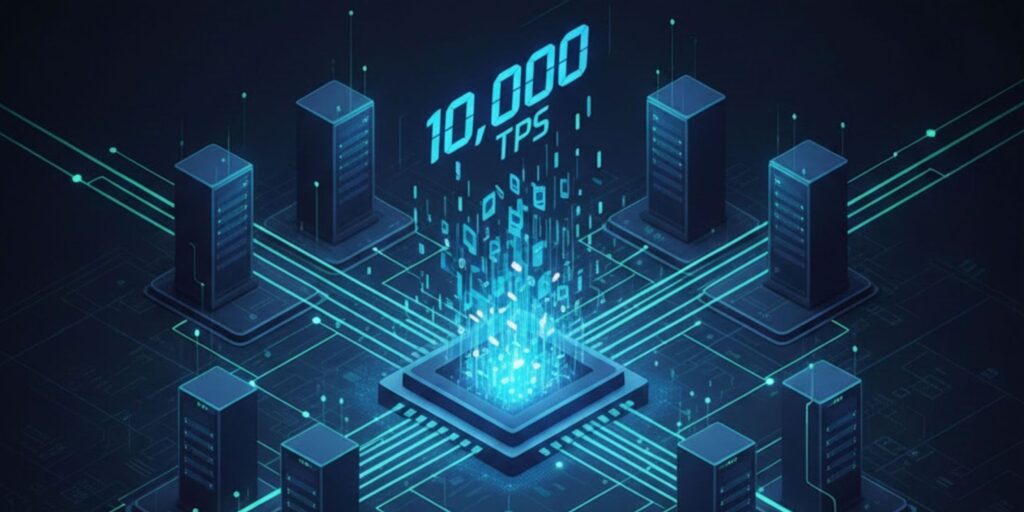
For banks, this scale brings a serious challenge. Systems are no longer tested by average traffic. They are tested by short intense bursts that arrive without warning. Engineering for 10,000 transactions per second is no longer an edge case. It is fast becoming a baseline expectation.
Key Takeaways:
| Area | What to Remember |
| UPI Traffic Reality | UPI traffic is bursty and unpredictable, with extreme spikes during festivals, salary days, and flash sales. |
| 10,000 TPS Readiness | Engineering for 10,000 TPS is no longer optional for banks supporting large scale digital payments. |
| Failure Patterns | Most UPI outages happen due to combined issues like lock contention, downstream latency, memory pressure, and retry storms. |
| Layered Design | High TPS performance depends on every system layer behaving well, not just one fast service. |
| API Gateway Role | The API gateway must protect backend systems through rate limiting, validation, and traffic shaping. |
| Orchestration Design | Stateless and idempotent orchestration helps systems scale and recover safely under load. |
| External Dependencies | NPCI and partner bank latency must be expected and isolated, not treated as exceptions. |
| Database Strategy | Databases often become silent bottlenecks at scale and must be designed for predictability, not just speed. |
| Observability | Transaction level visibility is essential to detect stress early and prevent customer facing failures. |
| Scaling Approach | Successful scaling from 1,000 to 10,000 TPS requires discipline, observability, and incremental engineering improvements. |
What UPI TPS looks like in the real world
UPI traffic is not smooth or predictable. On a normal day transaction volumes may appear manageable. But during festivals flash sales or salary credit days traffic surges sharply. These spikes are sudden and dense. Thousands of transactions arrive at the same moment rather than gradually increasing over time.
This is why planning for average TPS almost always fails. Systems that look stable during routine operations often struggle during peak minutes. For UPI platforms those peak minutes define success or failure. According to NPCI data, UPI processed over 16.73 billion transactions in December 2024 alone, highlighting the massive scale banks must handle.
Why systems fail under TPS pressure
When UPI systems break it is rarely because one component is slow. Failures usually happen when multiple small delays combine.
One common issue is lock contention. When many transactions try to update the same data records at once systems slow down dramatically. Another frequent cause is downstream latency. Even a slight delay from NPCI or partner banks can ripple through the system.
Memory pressure also plays a role. Under heavy load garbage collection pauses can freeze application threads just long enough to cause timeouts. Retry logic can then make things worse. Instead of helping retries often amplify load and create storms that overwhelm the system.
These issues are not obvious in early testing. They only appear at scale.
Thinking about UPI as a layered system
High TPS performance depends on how well every layer works together. Treating UPI as a single application hides critical weaknesses.
At scale each layer must absorb pressure without passing it blindly downstream. A failure at one layer should slow traffic gracefully rather than collapse the entire system.
Breaking the system into clear layers makes performance easier to reason about and easier to fix.
API gateway as the first control point
The API gateway is the first line of defense under high TPS. Its role is not just routing requests. It protects the system from overload.
A well designed gateway validates requests early, enforces rate limits and shapes traffic. Without this protection backend services receive more load than they can handle. That is when failures cascade.
At high TPS the gateway must fail fast and fail safely. Letting bad or excessive traffic through only pushes the problem deeper into the system.
Orchestration is where TPS is won or lost
The orchestration layer coordinates payment flows. At lower volumes inefficient orchestration may go unnoticed. At 10,000 TPS it becomes a major bottleneck.
Blocking calls slow everything down. Stateless designs scale better. Idempotency is critical. It prevents duplicate processing when retries occur.
Good orchestration designs treat payments as flows that can pause, resume or compensate rather than rigid step by step executions. This flexibility is essential under load.
Designing for NPCI and external latency
No bank controls NPCI response times or partner bank behavior. Engineering for high TPS means accepting this reality.
Systems must assume that external calls will sometimes be slow or partially unavailable. Timeouts need to be strict. Fallbacks should isolate delays instead of spreading them.
Retries require special care. Retrying everything immediately often makes things worse. Smart retry strategies focus on limiting impact rather than guaranteeing success at all costs.
This is one of the most important differences between theoretical TPS and real UPI TPS.
Databases under extreme transaction pressure
Databases are often the silent bottleneck at scale. Writes hurt more than reads. Hot rows and shared counters slow systems dramatically.
At high TPS not every transaction needs strong consistency everywhere. Some data can be eventually consistent without affecting user experience. Partitioning data reduces contention. Spreading load across shards prevents single points of stress.
The goal is not to make databases faster in isolation. It is to make them predictable under pressure. Performance testing for banking applications helps identify these database bottlenecks before they impact production.
Messaging and queues smooth traffic spikes
Queues play a vital role in absorbing burst traffic. They decouple user facing actions from backend processing.
At 10,000 TPS queues prevent sudden spikes from overwhelming downstream systems. They also enable back pressure. When systems slow down queues grow instead of collapsing services.
Separating critical flows from non critical ones ensures that essential payment confirmations are never delayed by secondary processing.
Observability becomes non negotiable at scale
At high TPS basic metrics are not enough. Knowing that a service is up does not explain why transactions are slowing.
Transaction level visibility is essential. Teams need to see where time is being spent across layers. Small latency increases are early warning signs of bigger failures.
Observability also feeds learning. Real traffic patterns reveal weaknesses that synthetic tests miss. This insight allows systems to evolve before incidents occur. Research from Gartner indicates that organizations with mature observability practices experience 50% fewer production incidents.
This is where performance engineering focused teams make a real difference. At Avekshaa we see again and again that teams with strong observability fix issues earlier and with far less disruption.
Load testing versus real user monitoring
Load testing is valuable but limited. It helps identify obvious bottlenecks and capacity limits. However it cannot fully replicate production behavior.
Real user monitoring shows how systems behave under actual conditions. It captures irregular traffic patterns network variability and user driven concurrency.
The strongest performance programs use both. Load testing prepares the system. Real user monitoring keeps it healthy.
Relying on one without the other leaves blind spots.
A practical scaling roadmap to 10,000 TPS
Scaling to 10,000 TPS does not happen in one jump. It happens in stages.
At around 1,000 TPS architectural weaknesses start to appear. Inefficient queries blocking calls and basic contention issues become visible.
At 5,000 TPS downstream dependencies and retry behavior begin to dominate. Observability becomes critical. Without it teams struggle to diagnose issues quickly.
At 10,000 TPS small inefficiencies turn into system wide failures. Engineering discipline matters more than tuning. Designs must assume failure and recover gracefully.
Each stage requires different focus areas but all rely on strong fundamentals.
Final thoughts
Engineering UPI systems for 10,000 TPS is not about chasing speed. It is about building systems that stay predictable under pressure. Real world UPI performance depends on architecture isolation observability and thoughtful handling of failure.
Banks that plan only for normal days are surprised during peak moments. Those that engineer for real peaks earn trust and stability.
At Avekshaa we work closely with teams to understand how their systems behave at scale and how to prepare them for real world traffic. If you are looking to strengthen your UPI performance journey now is the right time to assess your readiness.
Reach out to Avekshaa to start a focused conversation on building UPI systems that perform reliably at scale.
Frequently Asked Questions
- What does TPS mean in UPI systems?
TPS stands for transactions per second. In UPI systems it refers to how many payment requests the system can process at the same time without slowing down or failing.
- Why is 10,000 TPS important for banks today?
UPI usage has grown rapidly and traffic spikes are common during festivals salary days and large online sales. Banks must be ready for these peaks to avoid payment failures and customer frustration.
- Is 10,000 TPS a constant load or a peak scenario?
It is usually a peak scenario. UPI traffic is bursty which means transactions arrive in short intense waves rather than steadily over time.
- Why do systems fail even if they pass load tests?
Most load tests simulate ideal conditions. Real traffic includes delays retries uneven distribution and external dependencies which often expose weaknesses that tests miss. Comprehensive testing strategies help address these gaps.
- How does NPCI integration affect UPI performance?
NPCI and partner banks introduce external latency that cannot be controlled. Systems must be designed to handle slow or partial responses without impacting overall stability.
- What role do databases play in high TPS failures?
Databases often become bottlenecks due to lock contention hot records or heavy write activity. At high TPS even small inefficiencies can cause large slowdowns.
- Why are retries dangerous at high transaction volumes?
Retries increase load during already stressed conditions. Without careful control they can create retry storms that overwhelm systems and worsen outages. Incident response best practices help teams manage these scenarios effectively.
- How does observability help with UPI performance?
Observability provides transaction level visibility across systems. It helps teams detect early signs of stress and resolve issues before customers are affected. Learn more about monitoring tools that enable this visibility.
- Is load testing still useful for UPI systems?
Yes load testing is useful for identifying basic limits and bottlenecks. However it should be combined with real user monitoring to understand actual production behavior.
- What is the biggest mistake banks make when scaling for high TPS?
The biggest mistake is planning for average traffic instead of peak scenarios. UPI systems must be engineered for the worst few minutes not the best performing hours. Application performance management helps banks maintain performance during these critical moments.